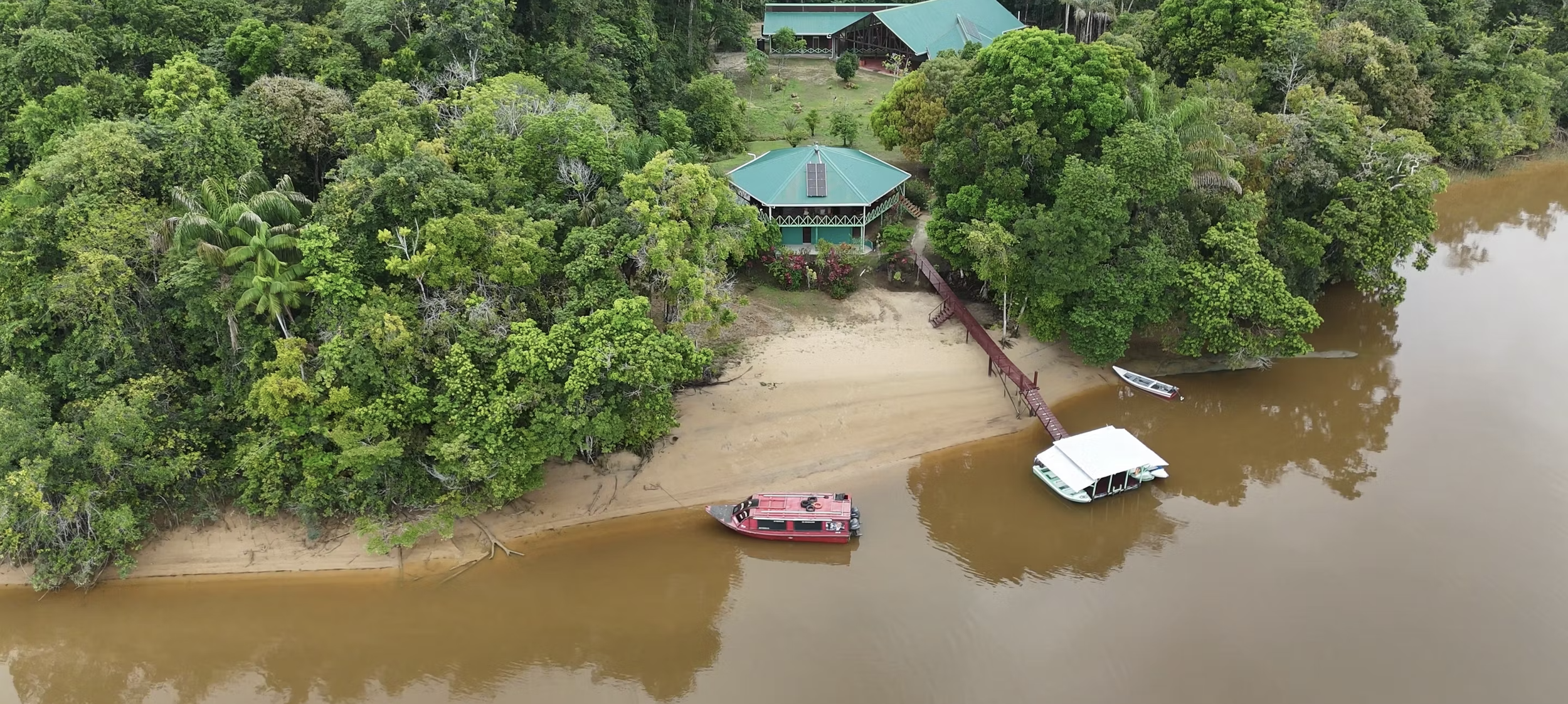
The Sophia Point Rainforest Research Centre exists to help transform science, conservation, and education in one of the last biodiversity hotspots.
We are an accessible research and education centre in Guyana, South America, just over two hours from the capital city.
We enable students from Guyana and overseas to study, understand and champion the rainforest.
We work with the University of Guyana and Amerindian communities to help deliver a more sustainable, equitable future for both people and planet.
Introducing Sophia Point
Spotted at Sophia Point
The puma moves silently through the diverse landscapes of the Americas. Capable of surviving in both dense tropical rainforests and open plains, this solitary wild cat relies on its agility, powerful leap, and camouflaged tawny coat to ambush its prey. As a vital apex predator, its presence is an indicator of a wild, healthy, and thriving ecosystem.
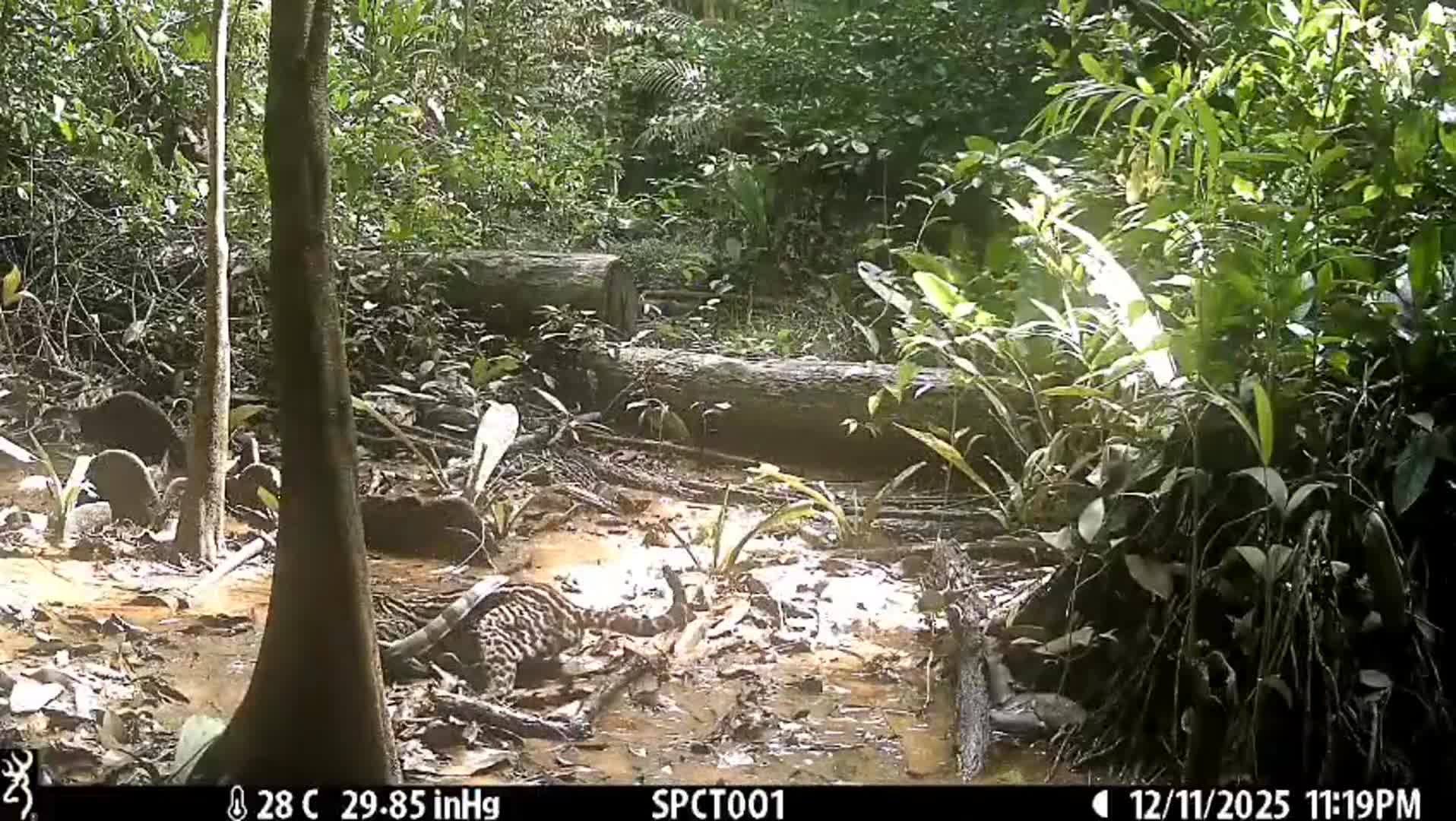
We were excited to capture this moment - an ocelot hunting and catching an iguana in Guyana's rainforest. It’s not common to capture such raw, natural behaviour up close! Ocelots are master hunters, relying on patience, camouflage, and swift, precise movements to capture their prey. Moments like this are a reminder of just how skilled and powerful these impressive predators are.
Tapirs play a vital role in maintaining healthy ecosystems. These gentle, nocturnal herbivores navigate the undergrowth using their uniquely flexible, trunk-like snouts to pluck leaves, shoots, and fruits. Often referred to as "gardeners of the forest," their foraging habits help disperse seeds across vast distances, making them essential to the survival and regeneration of the pristine wilderness they call home.
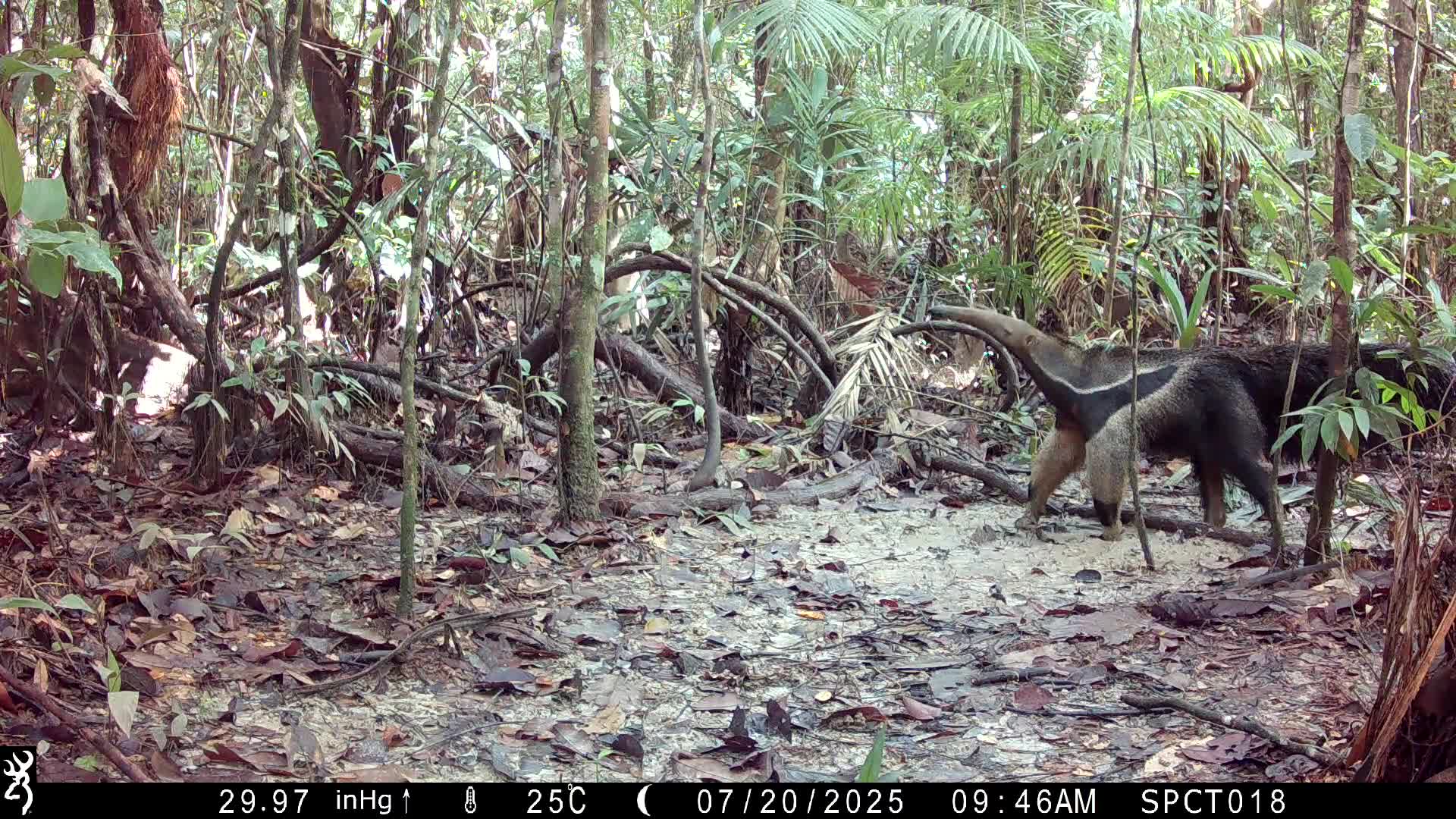
While famously associated with open savannahs, the giant anteater is equally at home navigating the dense floors of the Guyanese rainforest. This magnificent mammal uses its powerful claws and sharp sense of smell to tear into fallen logs and termite mounds.
Spotted at Sophia Point, this incredible jaguar. It is the biggest cat species in the Americas and the third largest in the world. The jaguar's powerful bite allows it to pierce the carapaces of turtles and tortoises. When available, it also preys on deer, tamandua, peccary and agouti.
Spotted at Sophia Point, this beautiful mother and baby labba. Labbas usually have one to three young a year. The labba can be considered an important seed distributor, since its diet includes leaves, stems, roots, tubers, nuts, seeds, herbs and fruit.
Spotted at Sophia Point, this inquisitive crab-eating fox. Despite its name, the crab-eating fox (cerdocyon thous) is in fact not closely related to true foxes and is a member of the canidae family (dog-like carnivorans). Cerdocyon comes from the Greek words kerdo (meaning fox) and kyon (dog) referring to the fox and dog like characteristics of the animal.
Despite its name, the crab-eating fox (cerdocyon thous) is in fact not closely related to true foxes and is a member of the canidae family (dog-like carnivorans). Cerdocyon comes from the Greek words kerdo (meaning fox) and kyon (dog) referring to the fox and dog like characteristics of the animal.
Spotted at Sophia Point, this gorgeous family of collared peccaries. Collared peccaries can live in groups of up to 50 individuals, averaging between six and nine animals. They sleep in burrows (often under bushes or larger systems of tree roots).
Spotted at Sophia Point, this curious jaguarundi. The jaguarundi is a medium-sized cat of slender build and uniform coloration that looks very different from other neotropical cats, which are usually spotted. It is often referred to as the otter-cat because of its otter-like appearance and swimming ability.
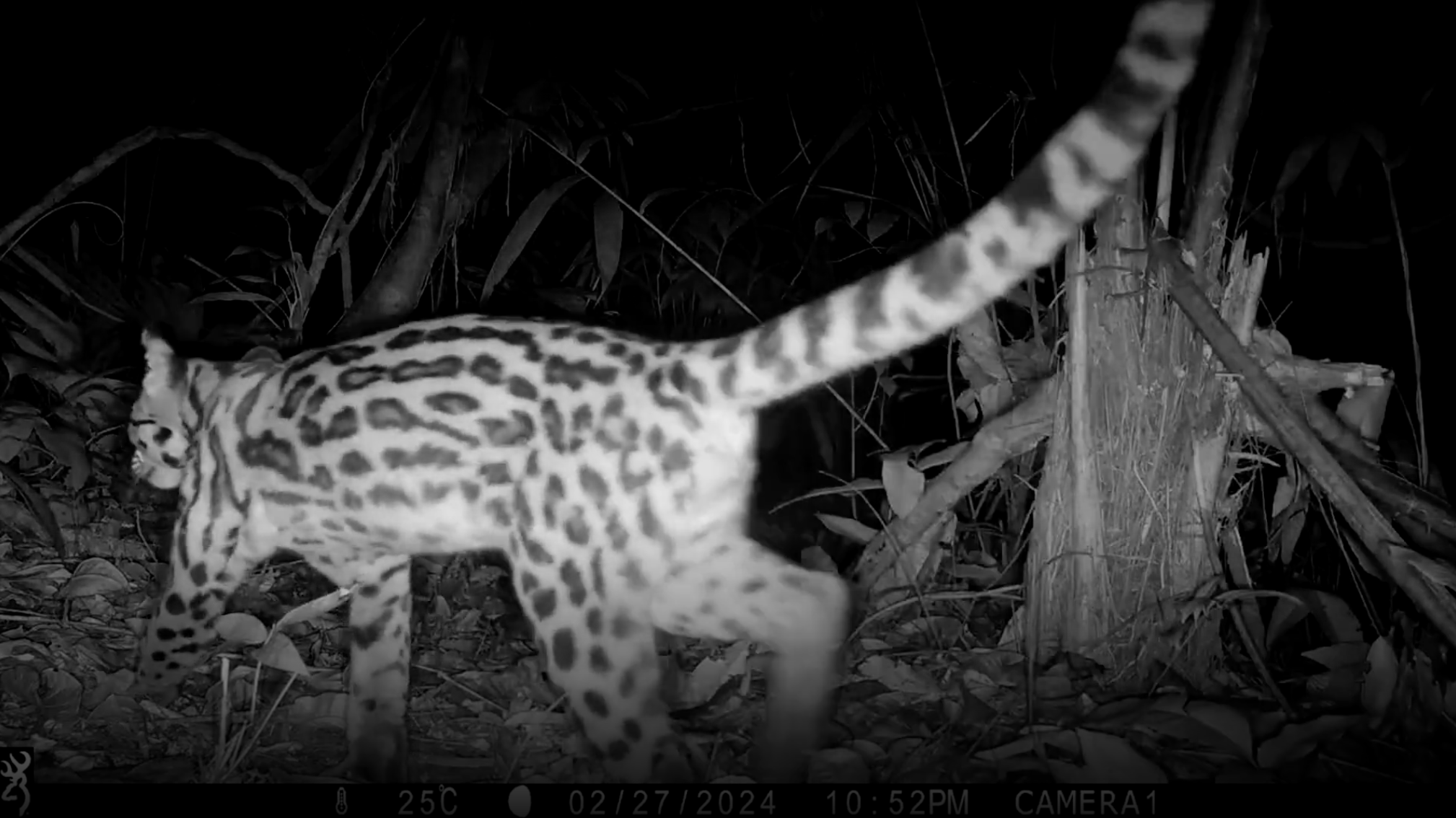
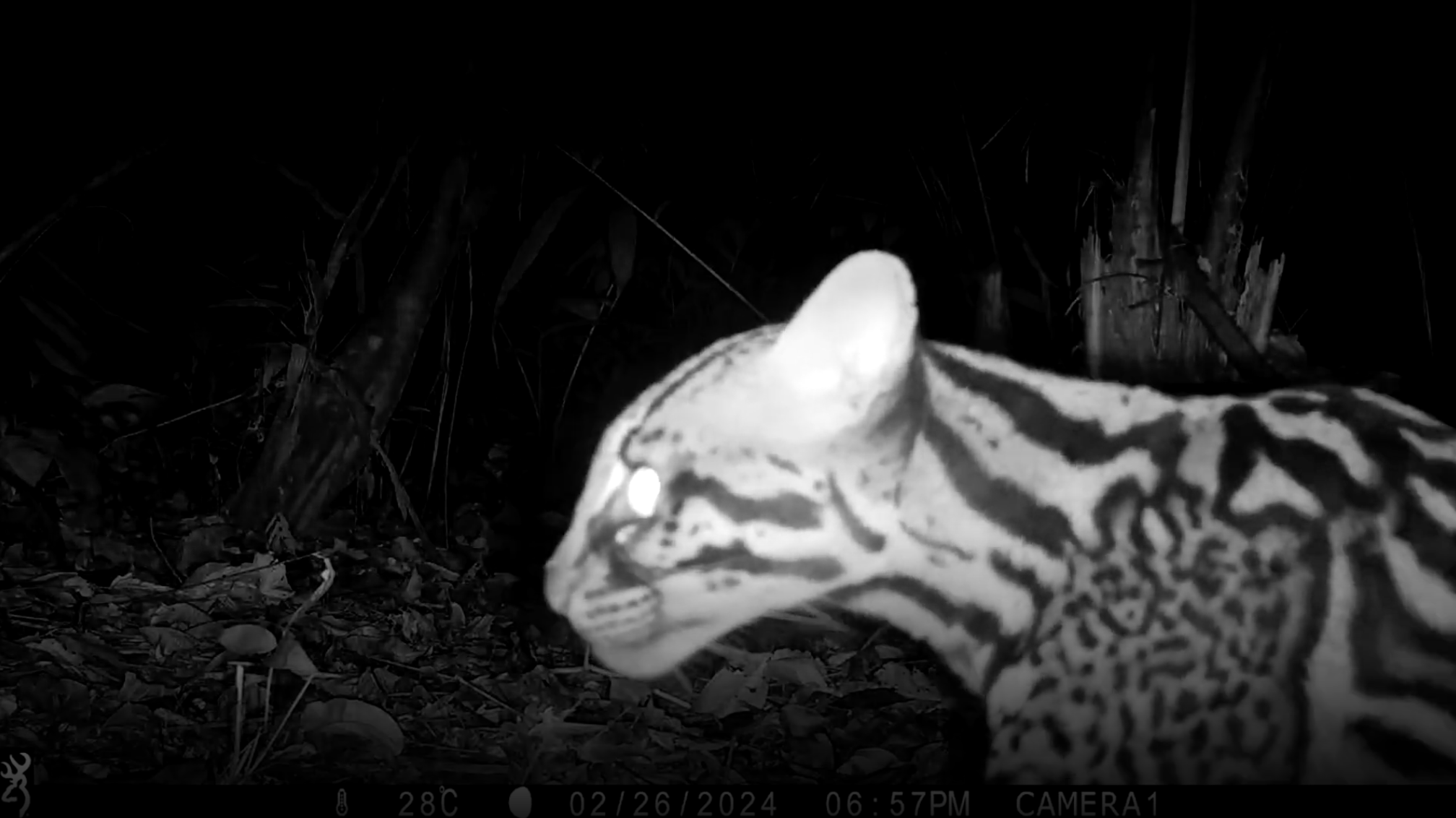
Spotted at Sophia Point, this magnificent margay. The margay is a skillful climber, and colloquially it is sometimes called the tree ocelot because of this ability. It spends most of the time in trees, leaping after and chasing birds and monkeys through the treetops. It can turn its ankles up to 180 degrees, so it can grasp branches equally well with its fore and hind paws. They also utilize their long tails to maintain balance while climbing.
Spotted at Sophia Point, this striking ocelot. The ocelot, a medium-sized spotted cat, is efficient at climbing, leaping and swimming. It prefers areas close to water sources with dense vegetation cover and high prey availability. It preys on small terrestrial mammals, such as armadillos, opossums, and lagomorphs. It is typically active during twilight and at night and tends to be solitary and territorial.
Spotted at Sophia Point, these delightful currasow. The curassow (crax alector) is a large bird reaching about 900 millimetres (35 in) in length. It is known locally as a powis. It is found in humid forests in northern South America and the Caribbean. It is a largely ground-dwelling bird. It lives in the undergrowth in lowland forests and plantations and in riverside thickets. It mostly eats fruit, but also consumes buds, shoots, leaves, flowers, fungi and invertebrates.
The curassow (crax alector) is a large bird reaching about 900 millimetres (35 in) in length. It is known locally as a powis. It is found in humid forests in northern South America and the Caribbean. It is a largely ground-dwelling bird. It lives in the undergrowth in lowland forests and plantations and in riverside thickets. It mostly eats fruit, but also consumes buds, shoots, leaves, flowers, fungi and invertebrates.
Spotted at Sophia Point, these beautiful pumas. Pumas are solitary animals, mating may occur year-round and is initiated by females. A female may give birth to up to six kittens. The young emerge from the den at around eight weeks old and remain with the mother until they are up to two years of age.
Spotted at Sophia Point, these beautiful Puma Concolor, known locally as deer tiger. Pumas are solitary animals, mating may occur year-round and is initiated by females. A female may give birth to up to six kittens. The young emerge from the den at around eight weeks old and remain with the mother until they are up to two years of age.
Spotted at Sophia Point, these loud warrakabra. Their interesting name probably originates from the deep low sounds they use to communicate, like a trumpet! These birds perform elaborate and noisy courtship dances involving strutting, leaping, and even somersaults in their excitement.
Spotted at Sophia Point, this majestic red brocket deer. Few studies have been made of this shy creature, yet red brocket deer are known to be both diurnal and nocturnal in their habits. They are solitary animals and do not form herds. Females usually give birth to a single fawn, although twin births are also quite common. Mothers hide their fawns in the undergrowth of the forest floor, returning regularly to nurse them.
Few studies have been made of this shy creature, yet red brocket deer are known to be both diurnal and nocturnal in their habits. They are solitary animals and do not form herds. Females usually give birth to a single fawn, although twin births are also quite common. Mothers hide their fawns in the undergrowth of the forest floor, returning regularly to nurse them.
Spotted at Sophia Point, this incredible jaguar. It is the biggest cat species in the Americas and the third largest in the world. The jaguar's powerful bite allows it to pierce the carapaces of turtles and tortoises. When available, it also preys on deer, tamandua, peccary and agouti.
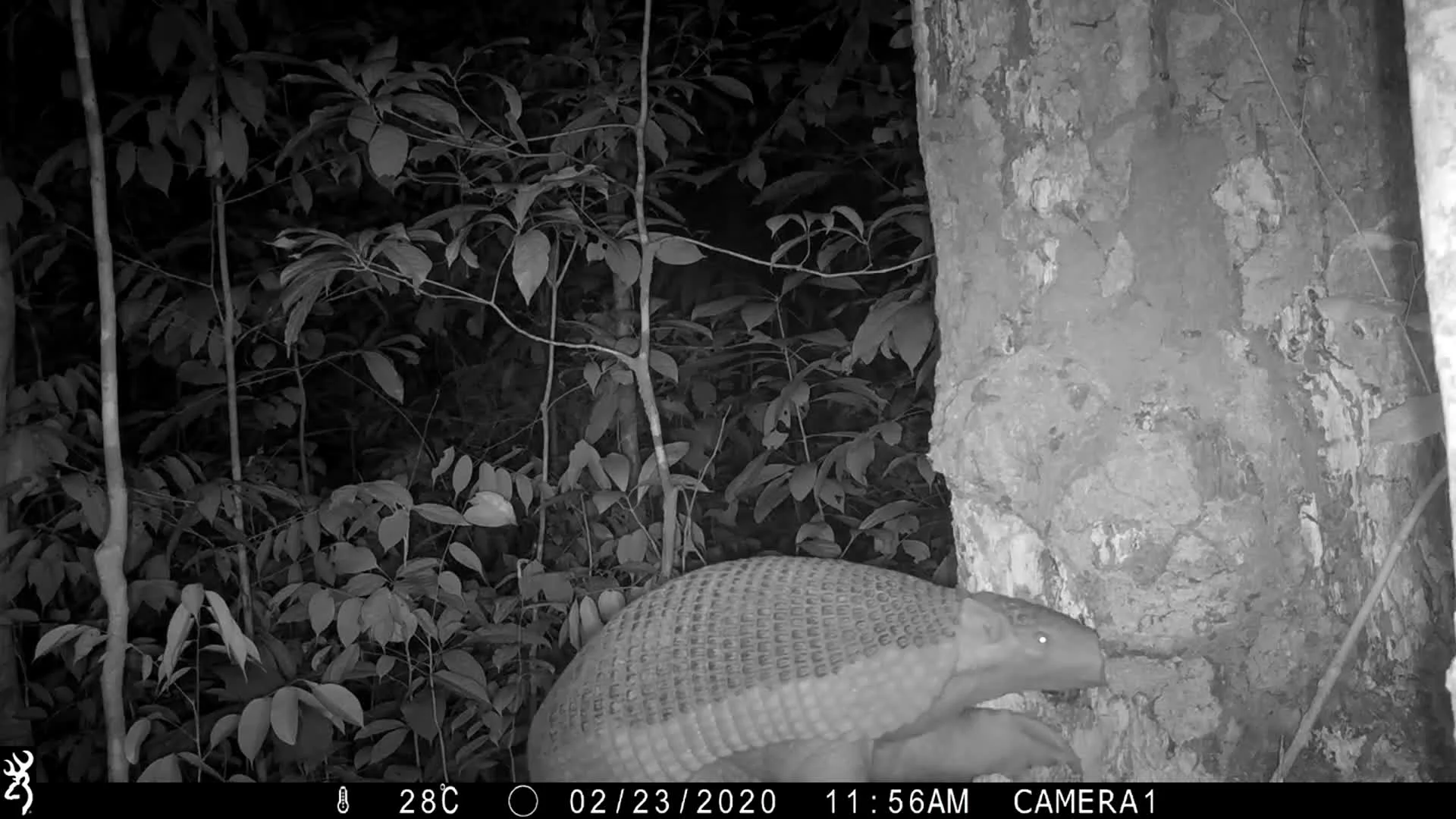
Spotted at Sophia Point, this mighty giant armadillo. The giant armadillo, the largest living species of armadillo, prefers termites and some ants as prey, and often consumes the entire population of a termite mound. It also has been known to prey upon worms, larvae and larger creatures, such as spiders and snakes, and plants. Some giant armadillos have been reported to have eaten bees by digging into beehives.
Spotted at Sophia Point, this impressive tapir. The South American Tapir is an excellent swimmer and diver, but also moves quickly on land, even over rugged, mountainous terrain. It has a life span of approximately 25 to 30 years. Its main predators are the black caiman and large cats, such as the jaguar and puma, which often attack tapirs at night when tapirs leave the water and sleep on the riverbank.
Spotted at Sophia Point, this beautiful puma. Known locally as a deer tiger, the puma can live in all forest types, lowland and mountainous deserts and in open areas with little vegetation up to an elevation. It has the largest range of any wild animal in the Americas spanning from Canada to the Southern Andes in Chile.
Spotted at Sophia Point, this beautiful Puma Concolor (puma). Known locally as a deer tiger, the puma can live in all forest types, lowland and mountainous deserts and in open areas with little vegetation up to an elevation. It has the largest range of any wild animal in the Americas spanning from Canada to the Southern Andes in Chile.
Spotted at Sophia Point, this adorable agouti (dasyprocta). When feeding, agoutis sit on their hind legs and hold food between their forepaws. They may gather in large groups to feed. They eat fallen fruit, leaves and roots, although they may sometimes climb trees to eat green fruit.
Latest News
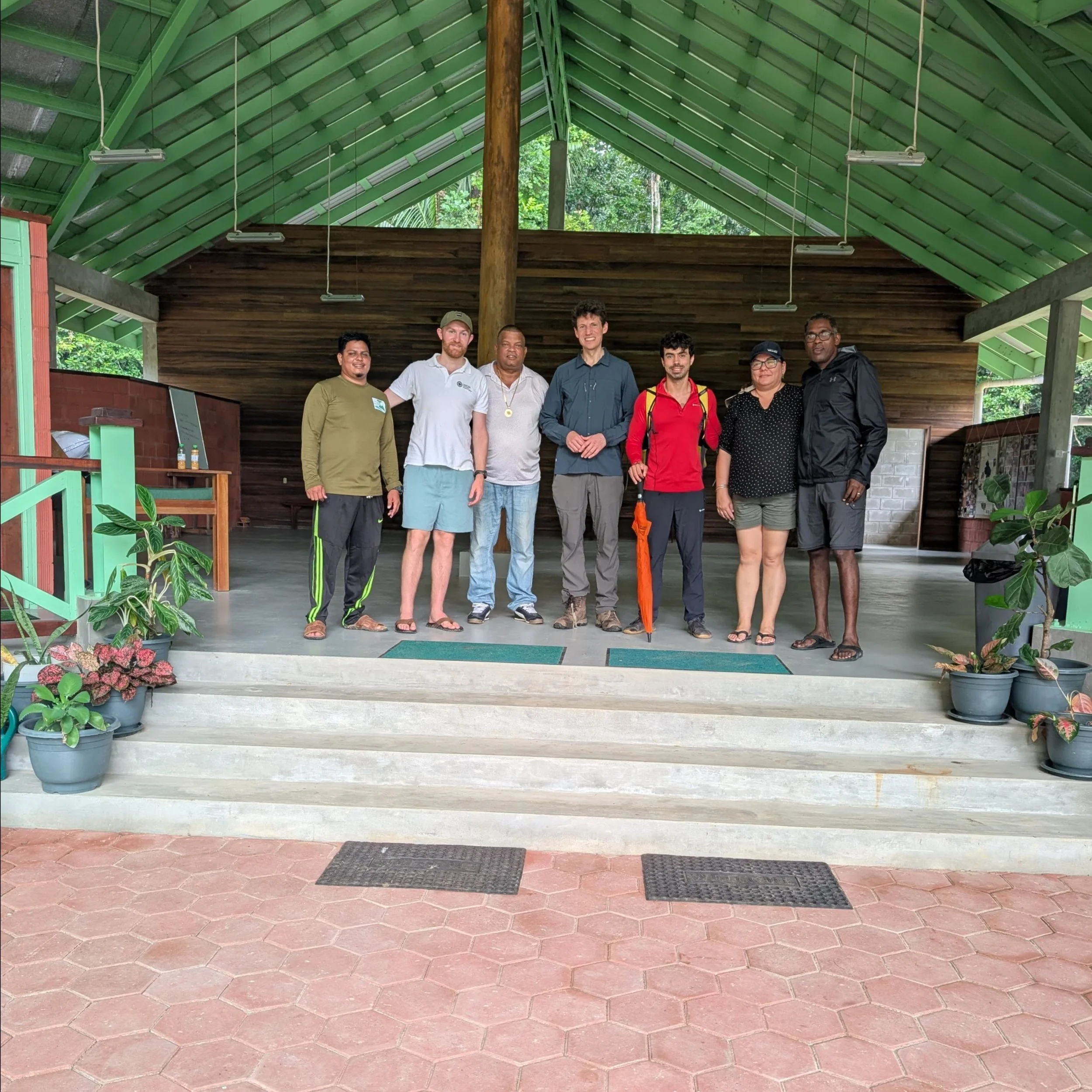
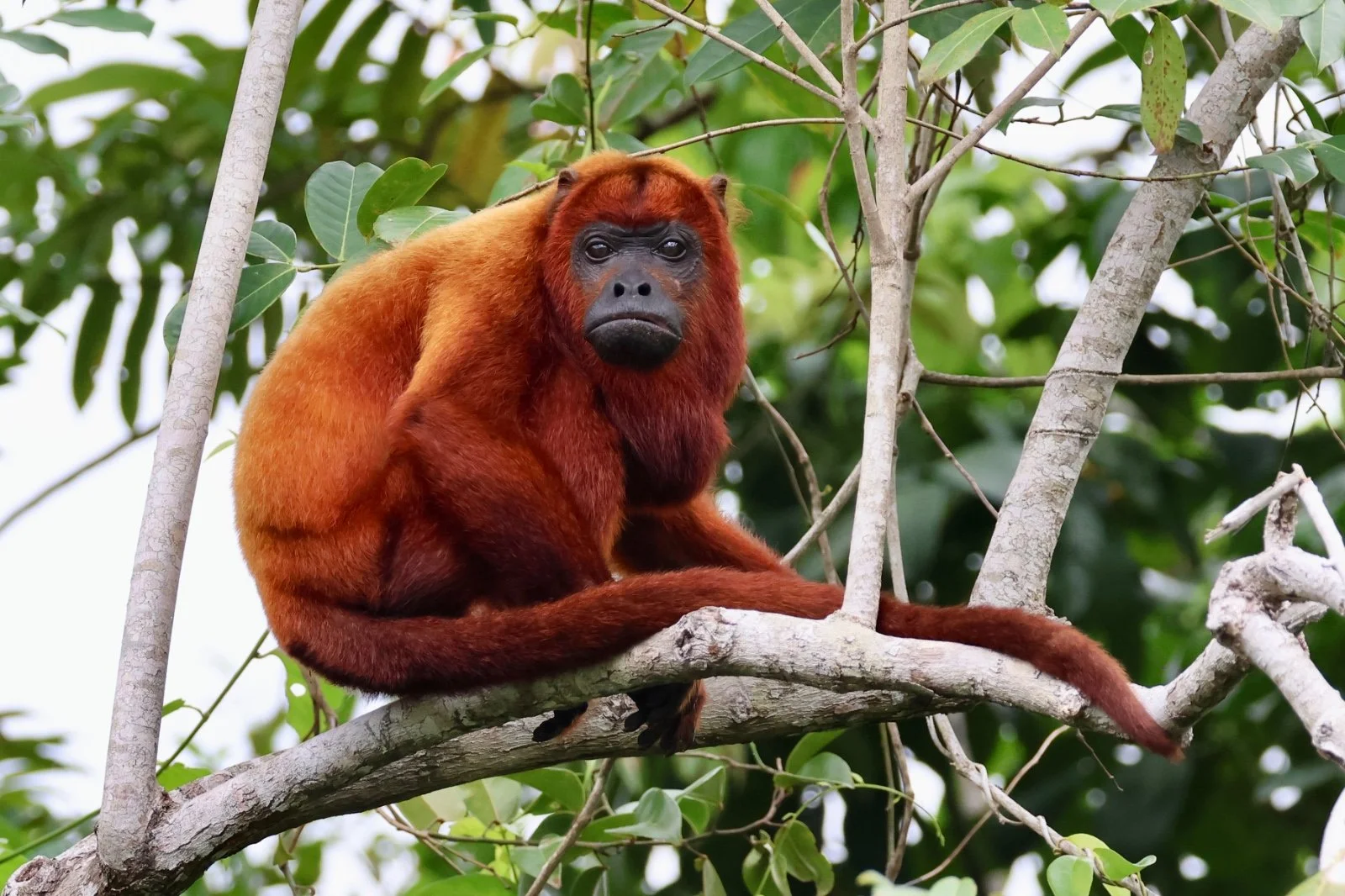
We were delighted to host the newly in post British High Commissioner to Guyana, Joe Fisher, at Sophia Point. Despite the rainy season downpours, we took Joe on a tour of our trails, checked our wildlife cameras, and even enjoyed a visit from the resident howler monkeys…
We may have been quiet for a while - but the forest certainly hasn’t.
Behind the scenes, Sophia Point has been bustling with activity: supporting vital research, facilitating training, forging new partnerships, and capturing incredible footage of the wildlife that surrounds us.
We’re delighted to begin sharing our newsletters again, and we look forward to keeping you updated on our recent work and exciting developments. Stay tuned!
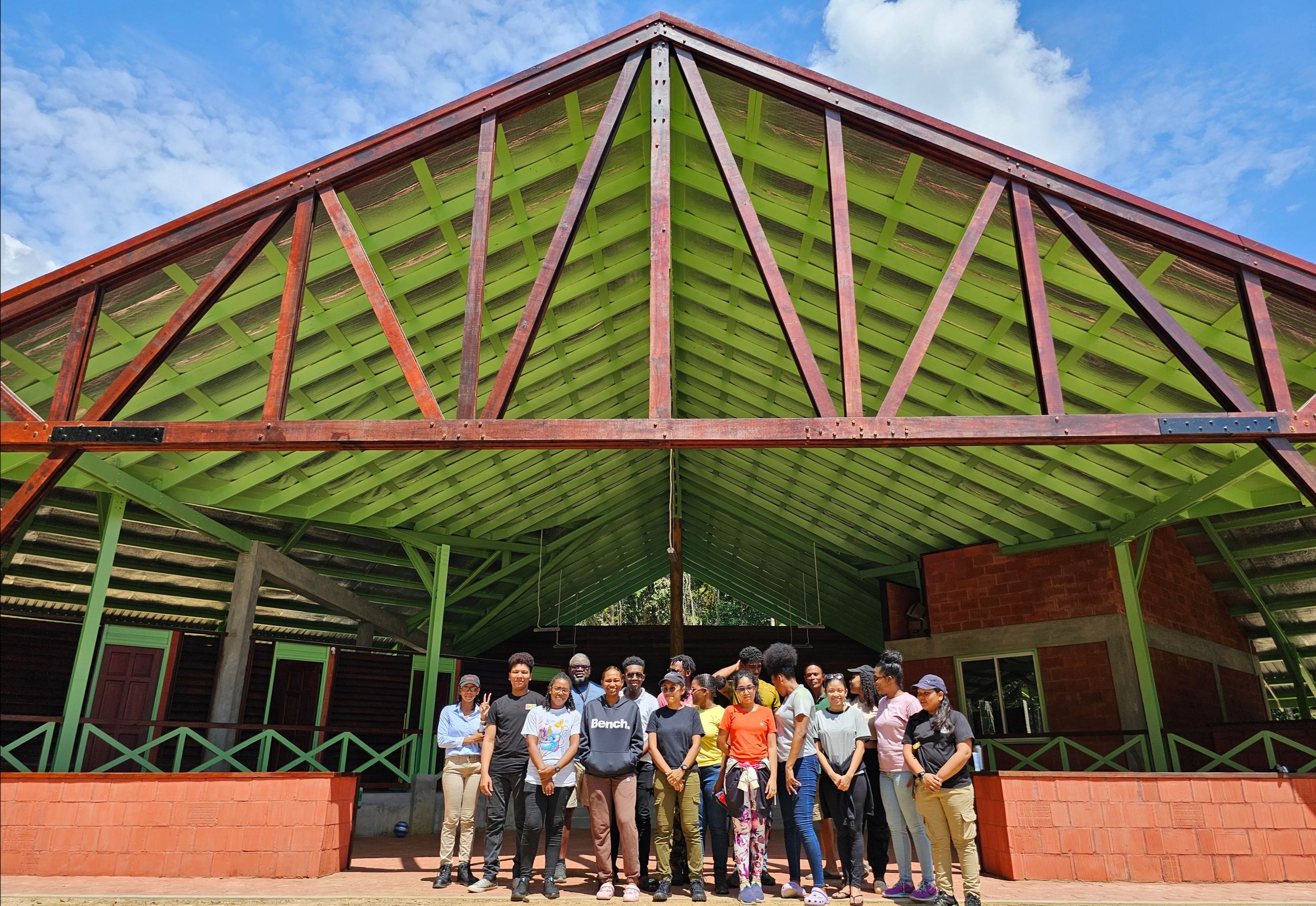
June 2025 was an exciting and rewarding month at Sophia Point Rainforest Research Centre as we welcomed students from the University of Guyana for both final year research placements and a third-year field course in mammalogy and ornithology.
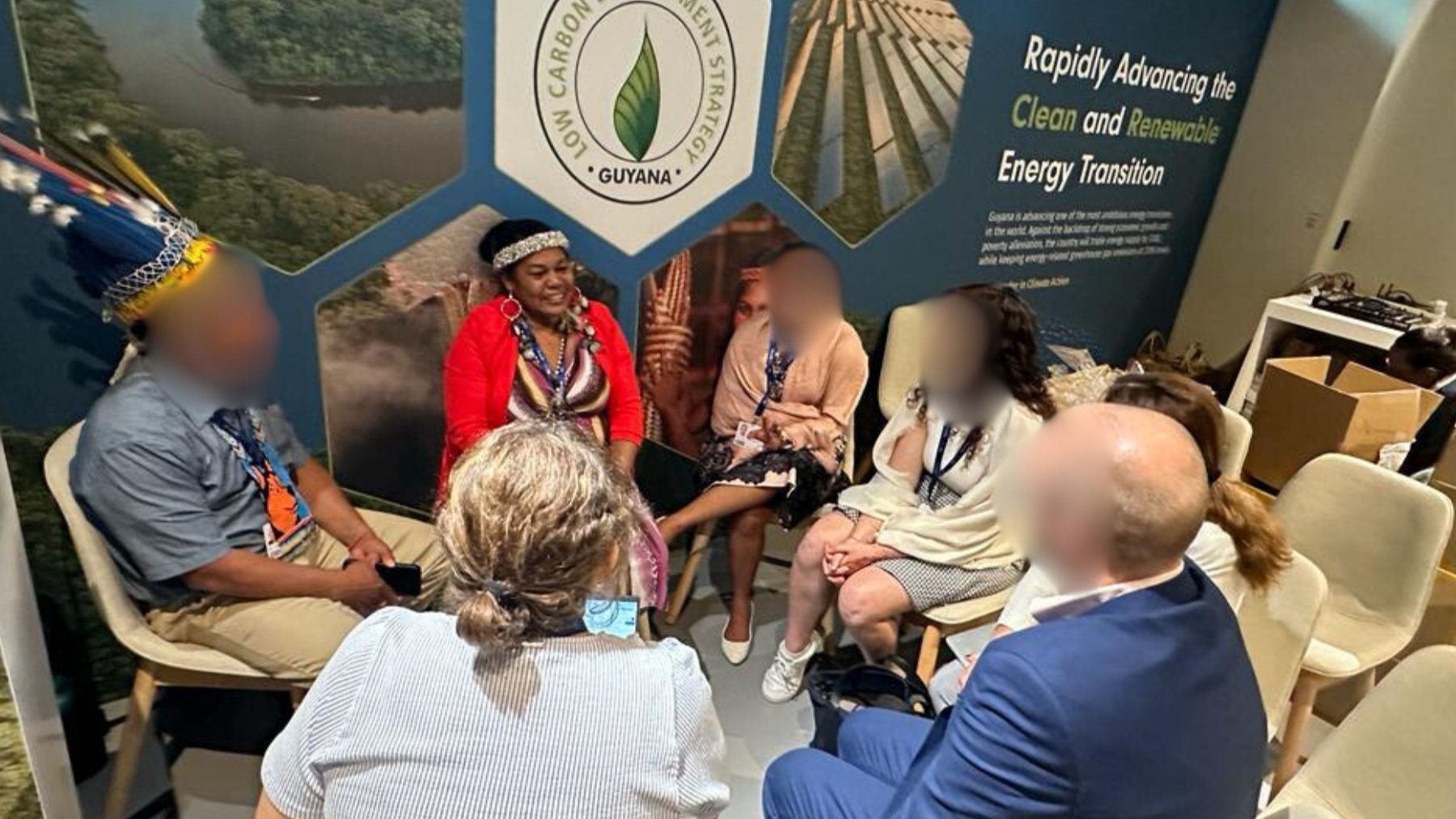
In May 2025, Sophia Point Rainforest Research Centre was honoured to host a delegation from the Forest Climate Leadership Partnership. The visit brought together officials from the Governments of Guyana, Brazil, the United Kingdom, and the Congo—key countries working collaboratively on global forest and climate solutions.
In April 2025, Sophia Point Rainforest Research Centre was delighted to host a vibrant and inspiring nature camp in partnership with the Karrau Science, Technology, Environment, and Math (STEM) Club. Young students from Karrau Village spent an exciting week immersed in the rainforest, learning firsthand about the importance of conservation and the wonders of their natural environment.
This March, Sophia Point launched the first phase of our Ranger Training Programme—an exciting milestone in building local capacity for rainforest research, education, and conservation. Staff from Sophia Point, along with participants from Karrau and Riverview villages, came together for an intensive two-week training course led by renowned Guyanese wildlife specialist, Waldyke Prince.
Sophia Point was excited to participate in the University of Guyana Open Day, engaging with students from the university as well as high school pupils who attended the event. It was a fantastic opportunity to connect with the next generation of Guyanese scientists, sharing our work in rainforest research and conservation.
We began 2025 on a high note at Sophia Point Rainforest Research Centre by welcoming a brilliant cohort of final-year students from the University of Guyana, each undertaking their independent research projects as part of their degree studies.
And other July 2024 updates…
Four years ago, founders Nicola Green and David Lammy had the idea of creating an accessible space for young people to study and understand Guyana’s rainforest. Today, thanks to the hard work, support and dedication of so many, that ambitious vision has been turned into a reality…
And other February 2024 updates…
We are delighted with the developments of our new research centre. Workers have been on site throughout the months of December and January making excellent progress. The main structure is complete, all internal walls have been set, and the roof will be finished in the coming weeks…
My name is Melena Pollard and I am the Toshao of a village in Region 10 called River’s View. Toshao is the name given to the leader of the village…
There is no solution to our climate and biodiversity crises, without protecting tropical rainforests.
Our Partners and Supporters
Guyana’s native squirrel monkeys are the ultimate canopy acrobats. Living in large, energetic troops, these tiny primates spend their days foraging for fruits and insects high up in the rainforest trees. Can you spot all five in the video?